Roasting the 2026 Pantone Color of the Year

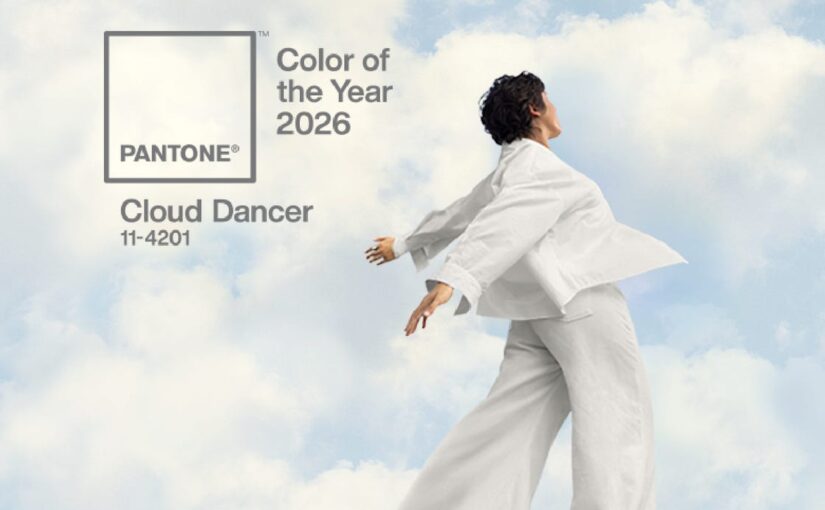
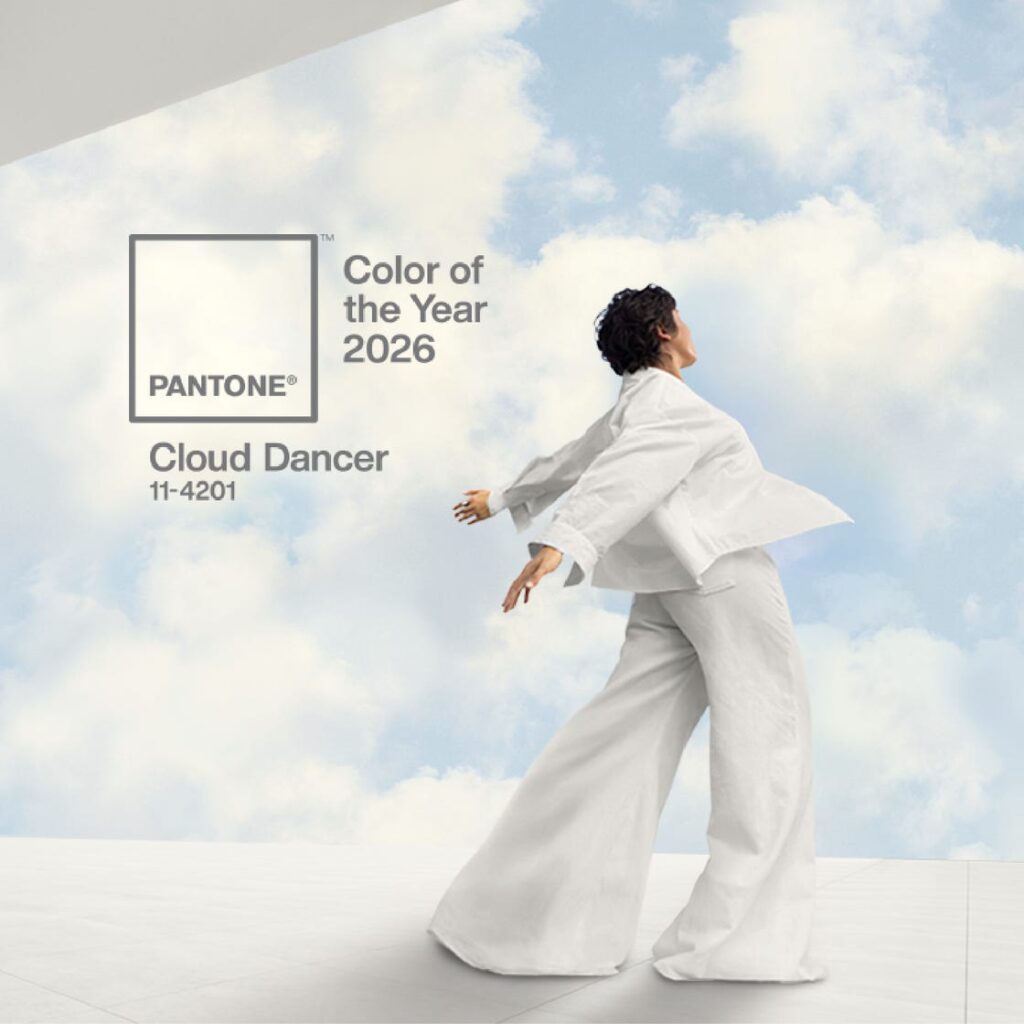
Recently Pantone announced its 2026 Color of the Year. It’s Cloud Dancer, a cold, bland, hueless TCX color, and it’s bad, and I hate it. So I roasted it 25 times (because I thought it was the color for 2025, and it’s possible that I can’t read).
  1. You look like if Taylor Swift was a CMYK value.
  2. You look like a discontinued brand of urinal.
  3. You look like a wine mom’s porcelain veneers.
  4. You look like Casper the Friendly Ghost Kitchen.
  5. You look like Millennial Beige if it could finally afford a mortgage.
  6. You look like a dingleberry on the butt of the AI slop version of the Coca-Cola polar bear.
  7. You look like the liminal space inside the head of a protagonist in an A24 film.
  8. You look like you should be taking vitamin D pills.
  9. You look like the walls of an asylum after it was bought by private equity.
  10. You look like the inside of a gym sock after a young man growing up in the 90’s discovers the Sears lingerie catalog.
  11. You look like Jim Gaffigan’s elbows.
  12. You look like the White Album if the Beatles were from Scottsdale, Arizona.
  13. You look like I wish I had actual snow blindness.
  14. You look like you smell like rubbing alcohol.
  15. You look like that chalky powder that tech bros drink because they’re no longer capable of feeling hunger or love.
  16. You look like you hate those filthy hobbitses.
  17. You look like the twins in the Matrix sequels.
  18. You look like the kind of person who uses the phrase “circle back” in an email.
  19. You look like you ate crayons as a kid but only because you didn’t want any of the other kids to use them.
  20. You look like what a Milk Dud should actually refer to instead of a beloved chocolate candy.
  21. You look like if I painted you on a canvas and displayed you in the MoMA, I would be rightfully hunted for sport.
  22. You look like the favorite color of the guy who changed HBO to HBO Now to HBO Go to HBO Max to Max and then back to HBO Max again.
  23. You look like male lactation.
  24. You look like a hedge fund manager spent hours deliberating between you and several other shades of eggshell white before doing a line of cocaine and screaming at his contractor to paint the BDSM room of his Manhattan condo.
  25. Finally, you look like you were invented by a company that puts a velvet rope around simple color management with its overpriced color books and manipulative SaaS model–wait, that’s not a roast, that’s just a true thing.

Anyway, this sucks, nothing is genuine, everything is rage bait, and the internet is a dead medium. Happy New Year!
Donkey Kong Bananza Review

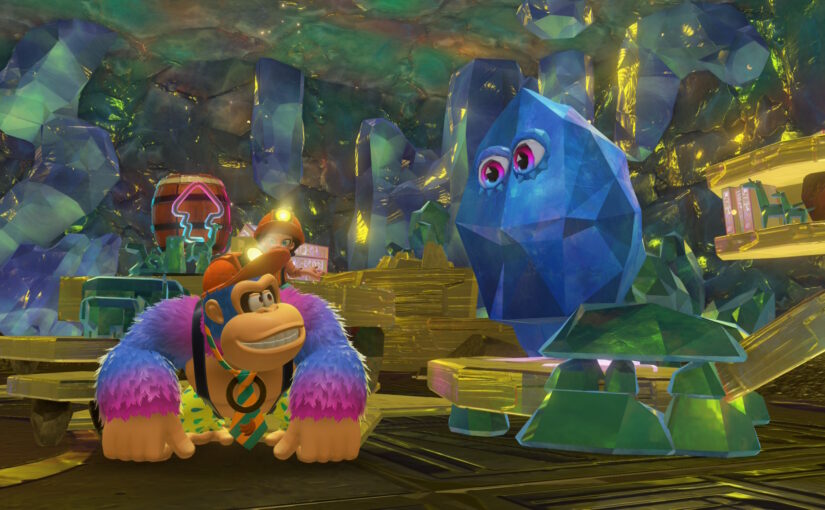
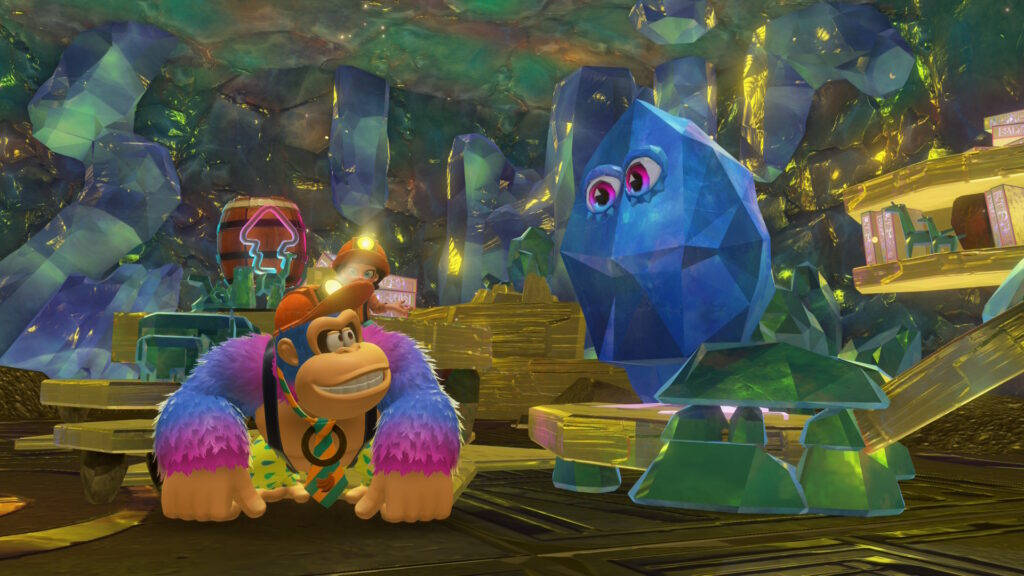
A screen capture of Donkey Kong Bananza. Donkey Kong and Pauline discover the location of the Exploritone, a blue crystal with eyes surrounded by carved tablet.

Since the dawn of video games, one question has plagued both critics and philosophers alike: what if big ape like banana and punch good? Only one game has ventured to answer it.

There’s a primal appeal to Donkey Kong Bananza. One is the simple motivation of its protagonist: one day, ape find shiny banana in cave, so ape punch holes in ground until ape find all shiny bananas.

The other is the raw catharsis of its control scheme. Press X? Ape punch up. Press B? Ape punch down. Press Y? Ape punch walls and faces.

Press A? Ape jump. Ah, see? Ape not just punch. Ape have layers.

And what layers there are. What’s surprising about the game is the weird depth it achieves—narratively, sure, but mostly literally. DK meets Pauline, a young girl with a magical voice but paralyzing stage fright. After a catastrophic cave-in perpetrated by a trio of simian miners known as Void Co., DK and Pauline’s only hope of reaching the surface again is tunneling to the center of the planet. There, a mythical MacGuffin called the Banandium Root will grant Pauline her wish to go home—and DK his wish to decimate the Chiquita supply chain.

The world-building here is whimsical but rich. DK and Pauline encounter myriad subterranean cultures, from arctic-dwelling zebras to light-carving serpents. Present in every layer are the Fractones, a race of sentient, regenerating crystals. In what feels like a nod to Journey to the Center of the Earth, you can read the history of these cavernous worlds along the way in journals chiseled by the intrepid Exploritone. A chip off the old Jules Verne block.

It’s easy to compare this game to Super Mario Odyssey, since it’s by the same dev team and has a similar aesthetic and collect-a-thon mission style. But whereas Odyssey leans heavily into platforming, Bananza goes all-in on the smash-and-grab dopamine rush of combat and terrain destruction. In the early stages of the game, I worried this meant any fight or puzzle could be circumvented by punching your way through it. Fortunately the fights and puzzles ramp up in difficulty. Yes, you’re still punching your way through them. But you’re punching thoughtfully.

All this culminates in a lengthy finale that’s too good to spoil (if YouTube hasn’t done that for you already). But what I loved most were the simple character arcs that pluck the heart strings as DK and Pauline forge their friendship. Pauline transforming DK through song grows her confidence in her innate gifts, the kind of journey we all wish for the young people in our lives. And DK learns that maybe, just maybe, there is more to ape than just banana.

There’s probably a good lesson in that, too.

Consider the Angler Fish

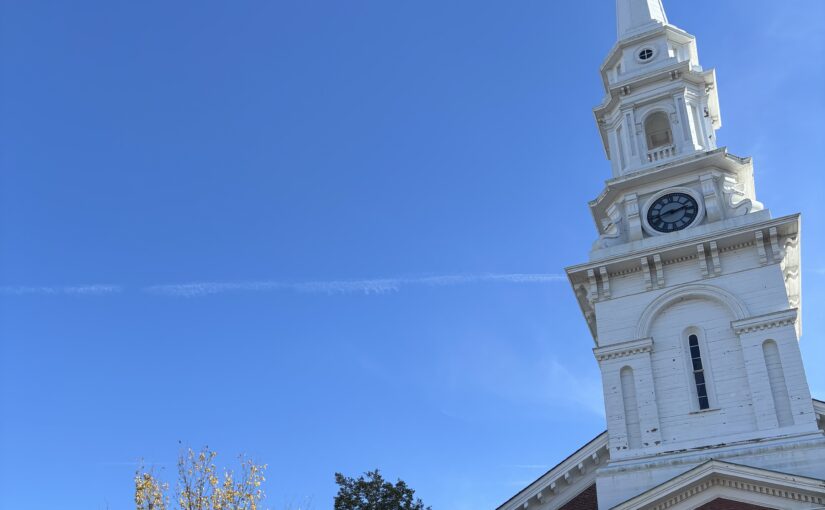
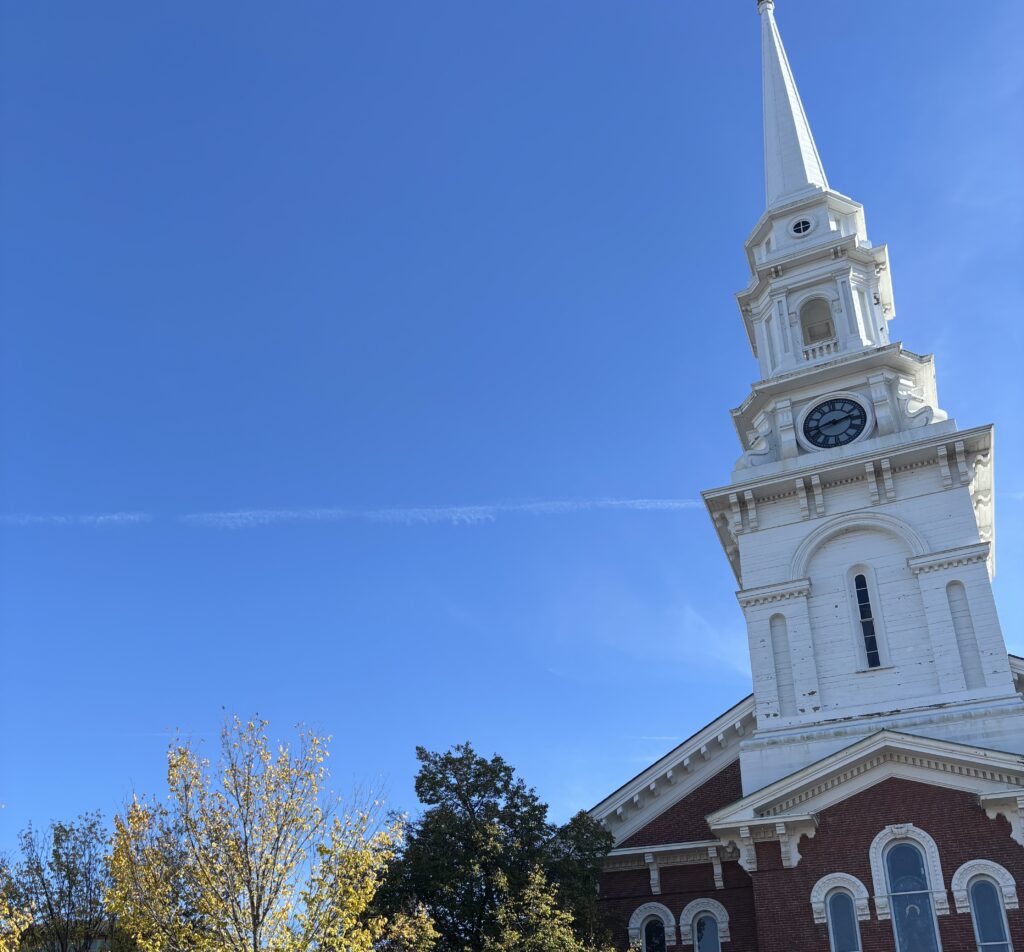
The steeple of North Church on Congress Street in Portsmouth, New Hampshire against a blue sky with a few trees below.
North Church on Congress Street in Portsmouth, New Hampshire on Oct. 18, 2026

Listen, I’m bad at protesting. It’s not that I lack conviction. In fact, I’m prone to one-on-one rants, as most of my friends can attest. But I’m bad at going to organized protests. I feel awkward in large gatherings, and I don’t plan far enough ahead to craft any clever signage. But last Saturday I determined to go to the nearest No Kings rally—not because I was eager to be part of the crowd, but because man, I love not having a king.

Seriously, not having a monarchy is one of the few things I get absurdly patriotic about. I like teasing my Canadian friends about still having the queen on their money. I like telling my English friends that yes, Meghan Markle was an American conspiracy to dismantle the Royal Family. Sure, they can quip back about how they enjoy literally every social service the United States can’t seem to muster, from universal healthcare to The Mighty Boosh. Does that stop me from wanting to throw a handful of tea bags into the closest harbor when I hear Jonathan Groff sing “You’ll Be Back” in Hamilton? No, it does not.

If you’re an American, it’s your right and privilege to regard monarchies with irreverence, loathing, and outright nausea. There are no divine coronations or inherited rights to rule here. We’re a slapdash, rough-and-tumble democratic republic, electing people from among us to represent us. Albeit, it’s a laughably imperfect system, like a third-grade playground bully trying to paint the Mona Lisa from memory. But it’s a democratic republic nonetheless. And for the sake of its continued perfection, sometimes even introverts have to leave their sanctuaries to put up a stink in the streets.

Before the No Kings rally, I put on the only star-spangled attire I have: a 2023 Major League Rugby grey championship hoodie for the New England Free Jacks. The logo, appropriately, is the lantern from Paul Revere’s midnight ride. To spice up the ensemble, I went to Walmart to buy a big-ass American flag but unfortunately failed to find one among the mounds of Halloween candy and plastic jack-o-lanterns. A brief traffic jam brought me to a parking spot just outside downtown Portsmouth, New Hampshire. I squeezed through the crowd, which occupied the whole of Congress Street, until I reached Market Square and planted myself across from North Church, empty handed but full of heart.

The gathering was similar to the others across the country: a lively mixture of protest and street party. Like the emblematic frogs of Portland, Oregon, there were a few jesters in bright inflatable costumes, in this case lobsters and (to my delight as a deep sea fanatic) angler fish to give it some maritime New England flare. There was a tidal wave of signs, declarations of civic pride and pictures depicting the would-be king in every unflattering caricature you could imagine. There was a man hawking free copies of the U.S. Constitution like beer at a baseball game. And the couple of detractors—monarchists, I can only assume—driving down Congress in their oversized trucks and hastily scribbled, bigoted poster boards were mostly ignored by the crowd.

But what stood out most to me were the people who didn’t stand out at all. People without signs or costumes, maybe clapping or cheering sometimes, but mostly just soaking in the camaraderie with quiet smiles. Maybe they were like me, treading the 9-to-5 waters at work, sick and fucking tired of watching technocrats, oligarchs, and ideologues spending those same waking hours tearing our country apart for scraps. Just regular people who have this silly notion that government for the people, by the people shouldn’t perish from the earth.

Look, I didn’t go to the protest because I think we’re actually living in a monarchy. But when enough power is concentrated in the hands of one person, it might as well be. Right now, the ruling party of Congress has all but abdicated its responsibility to legislate or even represent their state constituencies. Instead, they’ve blithely relinquished the power of the purse like someone being knowingly pickpocketed. The White House has opened a floodgate of executive orders, no more law than a doodle on the back of a bar napkin, but treated by some as royal proclamation. Meanwhile the Supreme Court, three members of which are the President’s own appointees, are rubber stamping his agenda, at a time when both the judicial and legislative branches should be stalwart checks on executive power.

As of this writing, the East Wing of the White House is being demolished to make way for a lavish $250 million ballroom, a steady creep of gilded opulence—the curse of Midas’s touch on what was once the People’s House. It might not be the home of a monarch yet. But as the President teases a third and very illegal term, things are certainly monarch-flavored.

Chances are, we’ll all have more opportunities to become better protesters. As for me, I might buy one of those angler fish costumes for next time.

At least the angler fish is a queen I can respect.

Peacemaker Season 2 Review

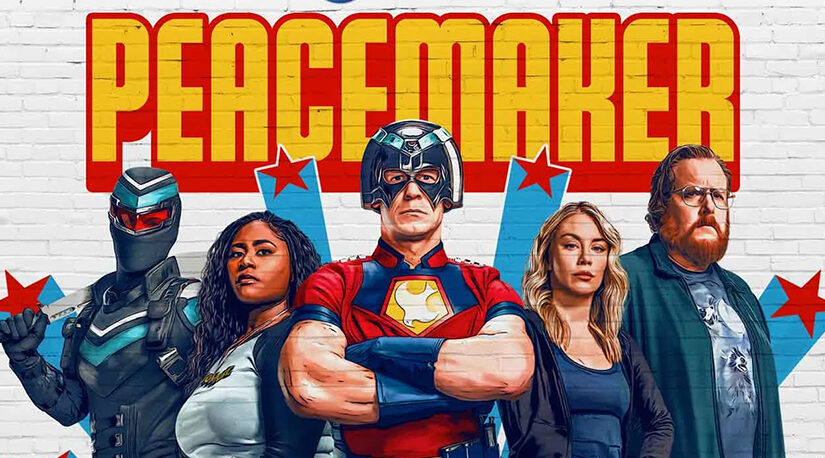
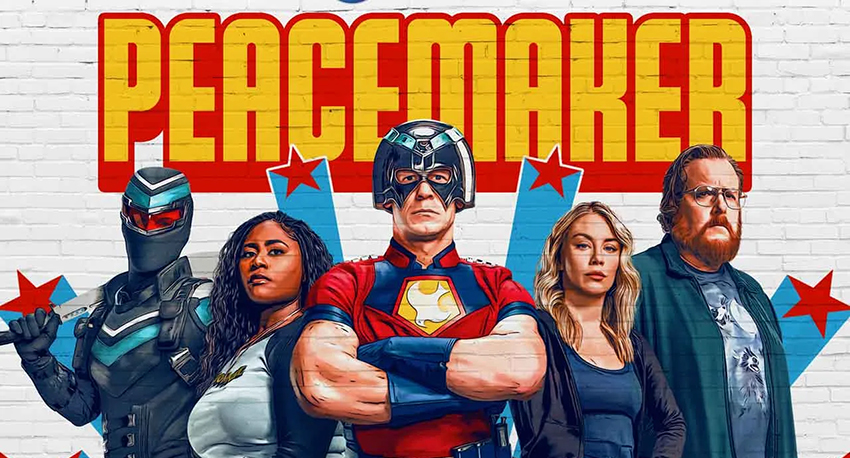
The promo image for Peacemaker Season 2: a painted mural on white bricks of the Peacemaker logo, and portraits of the characters Vigilante, Adebayo, Peacemaker, Harcourt, and Economos.
Promo artwork from the Peacemaker series.

I’ll admit, I’m a sucker for James Gunn. Yeah, there’s some valid criticism of his cinematic crutches: his reliance on licensed music, the gratuitous shock factor he employs, and the repeated trope of mercenaries and their found families. But his movies and TV shows often have strong character arcs and lots of emotional fidelity—the meat and potatoes of a satisfying narrative, which most superhero properties fail to bring to the table.

That said, Peacemaker Season 2 left me a little malnourished.

It’s a bummer, because Season 1 was fun and poignant in a lot of unexpected ways. I love stories about lesser known comic book characters. Peacemaker is unencumbered by any preexisting fandom, which lets Gunn tell an original story, with a nuanced take on masculinity and generational trauma—that is, in between alien butterflies hollowing out people’s brains and piloting them like undead meat mechs. 

On that note, it’s interesting how often Gunn’s stuff centers on angry, zombified masses—a reasonable obsession for someone who became the internet’s Villain of the Month, exiling him from Marvel and forcing him to wander the DC deserts for a while. From Starro commandeering the Corto Maltese army in The Suicide Squad, to Lex Luthor’s brigade of shitposting monkeys in Superman, the man is understandably getting some catharsis after tangling with the terminally online mob.

Anyway, in comparison to Season 1, Peacemaker Season 2 felt very uneven. Half of the episodes felt interstitial at best, the characters slowly ambling towards the next plot device while volleying some very hit-or-miss barbs. The action sequences were energizing but also very sparse for a superhero story.

I will say, the multiverse angle of Season 2 had more pathos than anything Marvel has done with its entire Multiverse Saga (save perhaps Loki). Early in the season, Peacemaker gets swept into an adjacent dimension where his father and brother are still alive and they’re a trio of celebrated, kaiju-slaying saviors. In some ways, it’s James Gunn continuing to digest the perils of internet culture: the idea that if you just walk through the right portal, you can live in a small but perfect world where nothing is wrong and you’re always the hero.

Of course, nothing in a Gunn story is that clean. Peacemaker’s perfect world turns out to be one in which the Axis powers won the war, and he’s the unwitting beneficiary of a Nazi-run America. But this big reveal is a blip on the radar, glazed over with a single flurry of heartbreaking violence that Peacemaker is forced to flee. The show never burdens him with processing what it meant to feel at home in that world, a missed opportunity given that Peacemaker’s entire arc is about him escaping the legacy of his white supremacist dad. In a show about taking a macho douchebag through a journey of emotional complexity, what did it mean to Peacemaker that his alternate universe dad was not a Nazi but unwilling to fight it with the full force of his heroism? Guess we’ll never know.

All that said, I could’ve watched a supercut of Freddie Stroma’s trivia-loving psychopath Vigilante and still gleaned the best parts of the season.

Does Peacemaker need a Season 3? Probably not. But as long as the Gunn keeps aiming for the heart, I don’t mind if he misses now and then.

Broken and Known

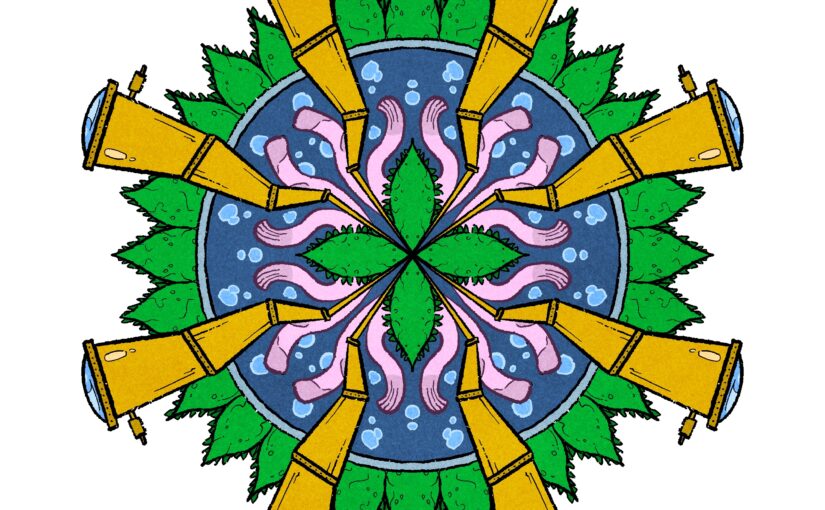
A digitally illustrated mandala of telescopes, agave shrubs, and socks in a tumbling laundry

Of all the places to be seized by revelation, I didn’t expect it to be the Wash & Go Laundromat in Redondo Beach, California.

I’m on the West Coast for work, but also for reconnaissance. This past week, I’ve been trying to learn videography as rapidly as Neo learning kung fu. I’m attempting to give our company a healthy dose of modern digital marketing, filming the shoe wear testing process at our biomechanics lab in Los Angeles, and proving to our team we have the internal capacity for webinars, TikToks, and podcasting.

I’ve also been staying at a friend’s studio in the back of their house near Hermosa Beach, testing the waters of a move back to this side of the country.

I miss Southern California. Like, a lot. Yeah, the traffic sucks, and shit’s expensive, and the city sprawl is as thick as kudzu. But I have tried to replenish the word “home” in my brain with at least seven other states in the Union, and none of them fill it to the brim like this one does.

Last time I lived here was in 2008, right when the Great Recession was revving its engines. It was not a great time to be a college graduate in the City of Angels with only an inkling of a career path. I made the right choice at the time (that is, after a brief and impulsive move to the Pacific Northwest that led to a nervous breakdown, but I digress). I moved to the East Coast, where there was extended family and a semblance of stability. And for at least a decade, it remained the right choice.

But stability isn’t always growth, and historically, California is where I’ve come to grow. It’s where my first memories were forged, combing shells on Newport Beach as a little blonde-haired kindergartener when my family lived in Costa Mesa in the 80’s. It’s where I came back when I left home after high school in the Midwest. I got my bachelor’s degree in Azusa, had my first kiss in Pasadena, got hired for my first marketing gig in the Arts District. The decade or more I collectively spent in California was arduous sometimes, but it was nourishing, like how a shrub thrives in the desert.

And now, at the end of a long but fruitful week of shoe footage, I find myself doing laundry at the Wash & Go in Redondo Beach, getting ready to fly to a trade show in Portland. A song comes on the radio. It’s “Iris” by the Goo Goo Dolls.

This song. I think I first heard it when I was living in Indiana at 16, driving back and forth between home and my summer job as a kitchen manager at a youth camp. The last gasps of radio before MP3s nearly drowned it.

There’s a bit of trivia about this song that’s never left my brain’s disheveled archives. When it was written, the lead singer and songwriter John Rzeznik was suffering from a year-long case of writer’s block. Just when he thought his career might be withering, he got a call to produce a song for the movie City of Angels. And he determined that no matter what spilled onto the page, no matter what he felt about it, he would commit to it wholeheartedly.

He wrote the song in one day, like a primal scream. The song was so ubiquitous—and the word choices were so elementary—that it was easy to overlook the earnest tension on display in the chorus:

And I don’t want the world to see me‘
Cause I don’t think that they’d understand
When everything’s made to be broken
I just want you to know who I am

In the music video, Rzeznik swivels on a chair in a lonely tower above the city, peering through a series of steampunk telescopes at a world he either can’t or won’t participate in. In the context of the lyrics, he’s a man torn in two: anchored to his isolation to protect what he perceives as grotesque injuries to his soul, but wanting to risk exposure to people so his soul might have a chance to flourish. It’s not unlike a songwriter in the throes of writer’s block, torn between latching his heart shut or opening it up to the world.

And it’s not unlike a single man with no kids at a transitional stage of his career, torn between the two coasts that, respectively, now offer the same prospects of stability or growth they always have in his past.

The song ends. The washing machine comes to a standstill. The clothes stop tumbling. An empty dryer awaits them.

It might be time for a transfer.